
SUSTAINABILITY

Timeless quality hosiery since 1934
We take a holistic approach sustainability, whether it's designing durable products, sourcing responsibly, reducing our environmental impact, or supporting people. We recognize that there are no quick fixes to today's complex sustainability challenges, but we are committed to contributing to a more responsible hosiery industry. Vogue's sustainability themes are:
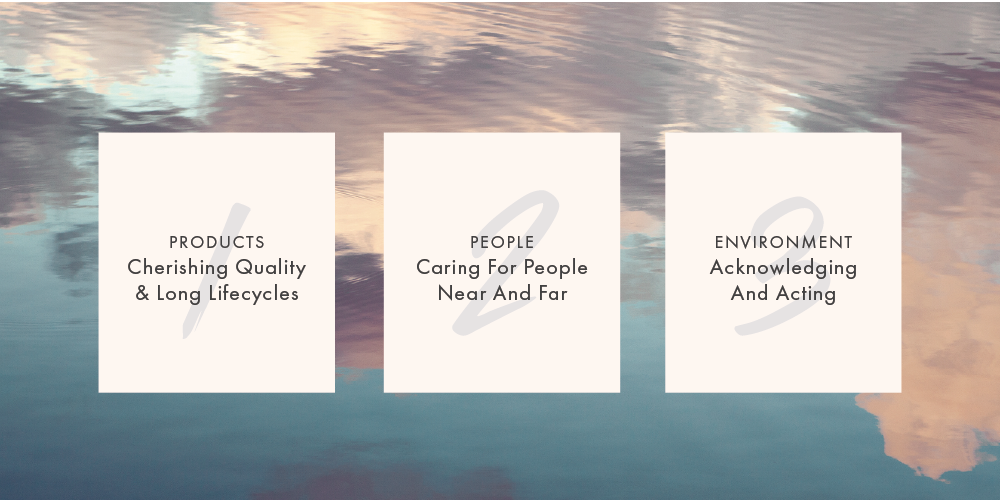
1: Products: Cherishing Quality & Long Lifecycles
A choice that lasts
We design timeless, durable products and prioritize preferred materials. We promote circularity, support longer product lifecycles, and encourage responsible garment care.
2: People: Caring For People Near And Far
People are at the core
We operate transparently and aim to be a responsible and fair business partner. We take care of our employees and contribute to the well-being of our wider communities.
3: Environment: Acknowledging And Acting
Concrete actions
We are committed to measuring and reducing our greenhouse gas emissions. We collaborate with our suppliers to promote more sustainable production methods.
Read more about our sustainability work here:
Nanso Group Sustainability Report 2025
Designing materials
All Vogue products are designed in Finland by our dedicated design team. Vogue's design approach is built on thoughtful details, material innovation, and carefully selected yarns that result in premium quality and durability.
Polyamide is our primary material. Many of the environmental challenges in hosiery relate to the use of fossil-based polyamide, as well as limited opportunities to reuse and recycle finished products. We address these challenges by designing for long-lasting use and by gradually increasing the share of recycled materials whenever possible, without compromising quality.
The Recycled Opaque Collection
The Recycled Opaque Collection includes sheer tights, classic opaque tights, and leggings made with ECONYL®. It is a circular material made from regenerated and recycled polyamide, produced from pre- and post-consumer waste such as fishing nets, carpets, and industrial plastics. By using recycled resources, we can create products without relying on virgin fossil-based fibres.
Vogue Materials 2025
In Vogue's collections, polyamide and recycled polyamide remained the most used materials in 2025, accounting for 56% in total. As the main materials for tights, alongside elastane, they continue to form the foundation of our product range. Of all polyamide used, 21% was recycled. Cotton accounted for a smaller share of the material mix (3,8%), and 69% of the cotton used was organic.
All our wool products are mulesing-free, and we do not use angora fur, down, or exotic animal skins in our products. Vogue packaging has been made from 100% FSC-certified cardboard since 2020. We aim to continuously increase the share of recycled or certified materials in our collections. In 2025, preferred materials accounted for 20% ot total materials used.
Materials in Vogue collection 2025

Sustainable European manufacturing
We focus on producing high-quality socks and hosiery under safe and fair working conditions. We aim to build long-term partnerships that support both product quality and more responsible ways of working. To reduce risks related to environmental or social non-compliance, we avoid placing excessive time or cost pressure on our suppliers.
We work with a small number of carefully selected suppliers, many of which are family-run businesses. We visit our partners regularly and emphasize transparency in our cooperation. We always allow sufficient time for production and do not select suppliers based solely on price. Our suppliers have also made environmental investments in their facilities, such as installing solar panels and upgrading machinery.
Introduction of Vogue Suppliers
Our commitments on transparency
To advance transparency and sustainability in the hosiery industry, we have signed the Transparency Pledge, reinforcing our commitment to greater visibility across our supply chain. We have published our supplier list since 2020.
Our sheer hosiery products are primarily manufactured in Italy and Serbia, while our natural fibre products are mainly produced in Portugal and Turkey.
Vogue product origins 2025

List of Vogue Tier 1 Suppliers
List of Vogue Tier 2 Suppliers
Sustainability criteria for suppliers
When selecting suppliers, we consider a range of factors. All factories must meet our reguirements for quality, durability, and responsible production practices.
All Vogue partners and suppliers are required to comply with:
1. Nanso Group's Code of Conduct
2. Nanso Group's Purchase Agreement
3. amfori BSCI Code of Conduct (or an equivalent third-party audited standard)
We have been a member of amfori BSCI since 2008, reflecting our commitment to social responsibility throughout our supply chain. Suppliers are expected to follow BSCI's core principles (or equivalent frameworks such as SA8000 or Sedex). Supplier performance is regularly assessed through independent audits.
Living Wage
Nanso Group is committed to promoting sustainable and responsible practices throughout its value chain. We aim to ensure that the manufacturers of our products receive fair compensation for their work. A living wage is defined as a wage that covers a decent standard of living for a worker and their family, including food, water, housing, education, healthcare, transportation, clothing, and other essential needs, as well as the ability to cover unexpected expenses.
Status in 2025
In 2025, Nanso Group had 51 Tier 1 suppliers. Of these, 55% are amfori BSCI audited, 25% are Sedex SMETA audited, and 20% are located in non-risk countries. Among BSCI-audited suppliers, 38% (11 suppliers) paid a living wage (28% in 2024). All BSCI-audited suppliers pay at least the statutory minimum wage. In some cases, employees are paid above this level depending on their role.
Our future goals
Alongside strengthening transparency, promoting the payment of a living wage remains a key development priority in our supply chain. We will continue to assess wage levels across different tiers of our supply chain to deepen our understanding and better target our actions. We also aim to support the development of amfori BSCI living wage requirements, enabling more systematic monitoring and further progress towards living wage implementation.
